Showing posts with label gray wolf. Show all posts

Tuesday, November 09, 2021

The Fight to Relist Wolves As Endangered

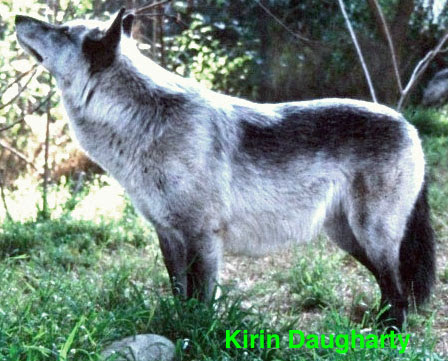
Today a trial begins in Ventura County seeking a court order for the Biden Administration to relist the gray wolf as an endangered species. A private individual and several conservation organizations are arguing that gray wolves once existed across North America and people have a right to see this icon animal in the wild. They argue wolves should be protected until their numbers and range have recovered from centuries of extermination.

Ironically, a single radio-collared gray wolf arrived in the northern reaches of Ventura County earlier this year. This lone male wolf has dispersed from the California/Oregon boarder where a small family of wolves have re-established territory.

Yellowstone's Hayden Valley

There is no doubt that the environment needs the return of this large predator. The return of wolves to Yellowstone National Park has had a transformative impact on the ecosystem. Wolves outside of the Park, however, have often met with persecution and slaughter.

Have wolves recovered across North America? No. Should they continue to have Endangered Species status? States with large natural populations, say 'No.' A single wolf in Southern California, surely deserves some protection. He also deserves the possibility of finding a mate, not a life of perpetual wandering to find a female that doesn't exist.

Do I want a wolf in my backyard? We have a pack of coyotes, now. They were very vocal last night. When there are eight to ten coyotes out in the darkness, our fifty pound dog can't go out into the yard alone. There have been several occasions when he has come face-to-face with them at the edge of the patio. Is he slightly bigger than the coyotes? Yes, but he is a retriever breed with rounded teeth that  give him little defense against a coyote pack. These coyotes have changed their natural behavior to try and fill the niche of wolves. They hunt in a pack, rather than in pairs.

The Endangered Species Act can't be a one size fits all protection. There needs to be a way to address species protection locally that is integrated into a national effort. Such an effort would require people coming together and that seems harder now than it did ten years ago. For every person who claims it is their constitutional right to see wolves in the wild, there is a person who will say it is their right to let their dog, cattle, sheep, etc out of an enclosure into an area safe from attack by wolves. The emotional turmoil around wolves.

Because wolves are a species across a wide and diverse range, it is time to rethink how we approach their protection and reintegration with humans. Those who love wolves can't litigate those who hate wolves to change their minds.

Tuesday, February 09, 2010

Gray Wolves - A Conservation Issue

Gray wolves are an important part of the biodiversity across North America, but their legal status as a species (endangered, threatened, hunted) currently varies from state to state. Some people revere wolves, others demonize them. As of January 2010 a variety of legal actions and efforts to reinstate federal protection are at the center of financial drives and activist letter writing on both sides of the “wolf issue.”

Someone just asked me, “ What do you think about this?”

Unfortunately, wolves are the perfect example of how appealing to human emotions is the worst way to address conservation problems. We humans are hard pressed to change our beliefs or our practices when they are deeply invested with emotions.

Wolves are neither angels of the forest nor bloodthirsty devils. They are top predators with an important role to play in balancing ecosystems. Science has demonstrated time and time again that healthy wolf populations contribute to healthy stable populations of large herbivores that are also hunted by humans (deer, moose and elk). When these herbivore populations are more naturally balanced, other species, plant and animal, benefit as well. Long-term studies at Isle Royale and Yellowstone National Parks, as well as in Alaska have shown that the site of a wolf kill measurably increases the fertility of the ground for as much as ten years. The wolf brings the food web full circle.

But wolves challenge the human position of dominance. No animal likes to feel vulnerable, least of all humans. Sitting in California, where we exterminated our wolves long ago, it is easy for me to extol the wolfs beneficial role in the environment. I’m not going to look out my window and see one stalking my cattle. On the other hand, I have had coyotes stalking my backyard chickens in the middle of the day. I have looked out the window late at night to see coyote eyes looking back at me. Our growing hawk population brings predator/prey interactions into my yard on a daily basis. Whether it was protecting chickens, a small puppy or a tortoise hatchling, it was my responsibility to provide safe, completely fenced in areas for my animals without blaming local predators.

In Africa, the Cheetah Conservation Fund works with ranchers and livestock owners to help them protect their animals in a sustainable way that does not endanger cheetahs. Throughout some of the poorest tribal areas of the world, the Snow Leopard Trust engages local herders by listening to their fears and their needs in order to replace myth with knowledge and to build community-based conservation. These organizations succeed because the needs of the people and the wild animals involved are both taken into account.

In the American northeast, lawsuits reinstated endangered species status to gray wolves, yet there were 16 incidents of wolves being illegally killed in Michigan, Wisconsin and Minnesota in the last two months of 2009. The death of the animals came to light because several were radio-collared individuals in scientific studies. How many other uncollared wolves might have been killed is unknown. While these illegal wolf killings are being investigated by the U.S. Fish & Wildlife Service, legal status did not protect these wolves.

At the close of 2008 Idaho was believed to have a wolf population of 846 individuals. In 2009, the state instituted a wolf hunting season with a statewide quota of 220 animals. When the quota was not reached during the prescribed season, the Idaho Fish and Game Commission extended the season to March 3, 2010 in some areas. This isn’t a hunting season, it is a poorly disguised population control based on political influence not scientific data.

Wolves have become an issue because people on both sides have made this an emotional fight. There are real problems here–problems regarding biodiversity and ecosystem survival, subsistence ranching and human safety. None of these problems will be solved in a courtroom, through name calling or illegal slaughter.

If people with nothing but a felt gur on a barren Mongolian hillside, who depend completely on their livestock for survival can learn to value another living thing for the role it plays in the natural world, then surely, Americans can as well. But you can not force respect through litigation. If the conservation organizations involved spent as much money on community-based education and economic efforts rather than lawyers, maybe some real change might be accomplished.

I’ve watched wolves at Yellowstone National Park and listened to the howl of a wolf while camping at an isolated lake in the Yukon. I’ve never been afraid of wolves, but I have always respected them for the top predators that they are. A wolf is not a furry human, it is a wild creature, strong and powerful. The wolf’s goals and needs do not always correspond with human’s.

Would the world be a better place if we let wolves fulfill their natural place in the ecosystem? It would undoubtedly be a healthier place.

Would it be a different and sometimes more complicated place? Yes.

From wolves, to energy, to health care. It is time we came to the table honestly, respectfully, and willing to work together for the betterment of all.

Tuesday, January 30, 2007

Delisting the Gray Wolf


Yesterday, January 29, 2007, the United States Federal Government delisted the gray wolf in the lower 48 states. Since 1974, the gray wolf has been protected as either “threatened” or “endangered” under the Endangered Species Act. But today, that protection is gone.

As Americans populated the continent, they saw the gray wolf as a threat and competitor. Whether it was wolves preying on naive domestic animals, hunting prey humans wanted for themselves or because wolves would not relent to human domination, these top predators were exterminated from the Atlantic to the Pacific. In California, the last known wild wolf was trapped in Lassen county in 1924.

Since an experimental reestablishment of wolves began in Yellowstone National Park in 1995, there have been avid supporters and vitriolic opponents. While the humans debated, the wolves multiplied and reestablished balance in the ecosystem. In short, they did what humans could not. They controlled the elk population by eliminating the sick and weak. They resurrected damaged plant communities by reducing an overabundance of browsers. And they helped a growing list of species recover in the Park–song birds, beaver, fox and others–because of the improvement to the habitat.

But while the Park was returning to a wild balance, wolves were leaving to colonize beyond its boarders. In Minnesota and Wisconsin, Canadian wolves were crossing the boarder to colonize the areas, long devoid of top predators, that offered prime habitat. While the movement of these wolves is good for the natural environment, human fear of a top predator has again taken over rationality.

Now that the gray wolf is no longer designated as an “endangered species,” states will be able to “manage” wolf populations as they see fit. Idaho, Montana, Wyoming, Minnesota, Michigan and Wisconsin will decide if wolves will be protected, shot on sight, poisoned, trapped or shot with a license as trophy game. Residents of Alaska have been trying to express their desires to their public officials for years regarding rational treatment of their wolves, yet despite votes to stop it, gray wolves are still shot from planes because of the power of the hunting lobby.

What will be the fate of the gray wolf in the 21st century. Will 21st-century humans use their intellect to learn to live with a top predator for the betterment of the land and ecosystems or will we react with primal fear and greedy short-term gain to once again drive the wolf to near extinction?

Is living with a large predator difficult? Yes. But we conservation-minded Americans expect Africans to share space with the African lion and Indian villagers to find ways to live with the Bengal tiger. We haven’t pressed as hard to save gray wolves in Europe or Mexico. Maybe it is because we secretly know it would be hypocritical.

All of our eyes should be watching these states where wild wolves are now in the cross hairs. The Great Lake states have been allowing their wolves to recover naturally, the Rocky Mountain states seem poised to stop wolf recovery.

Will we repeat the bloody past or will we find ways to live beside America’s top animal predator? We should all be ready to speak up.