Showing posts with label wild snake in Los Angeles yard. Show all posts

Sunday, June 24, 2012

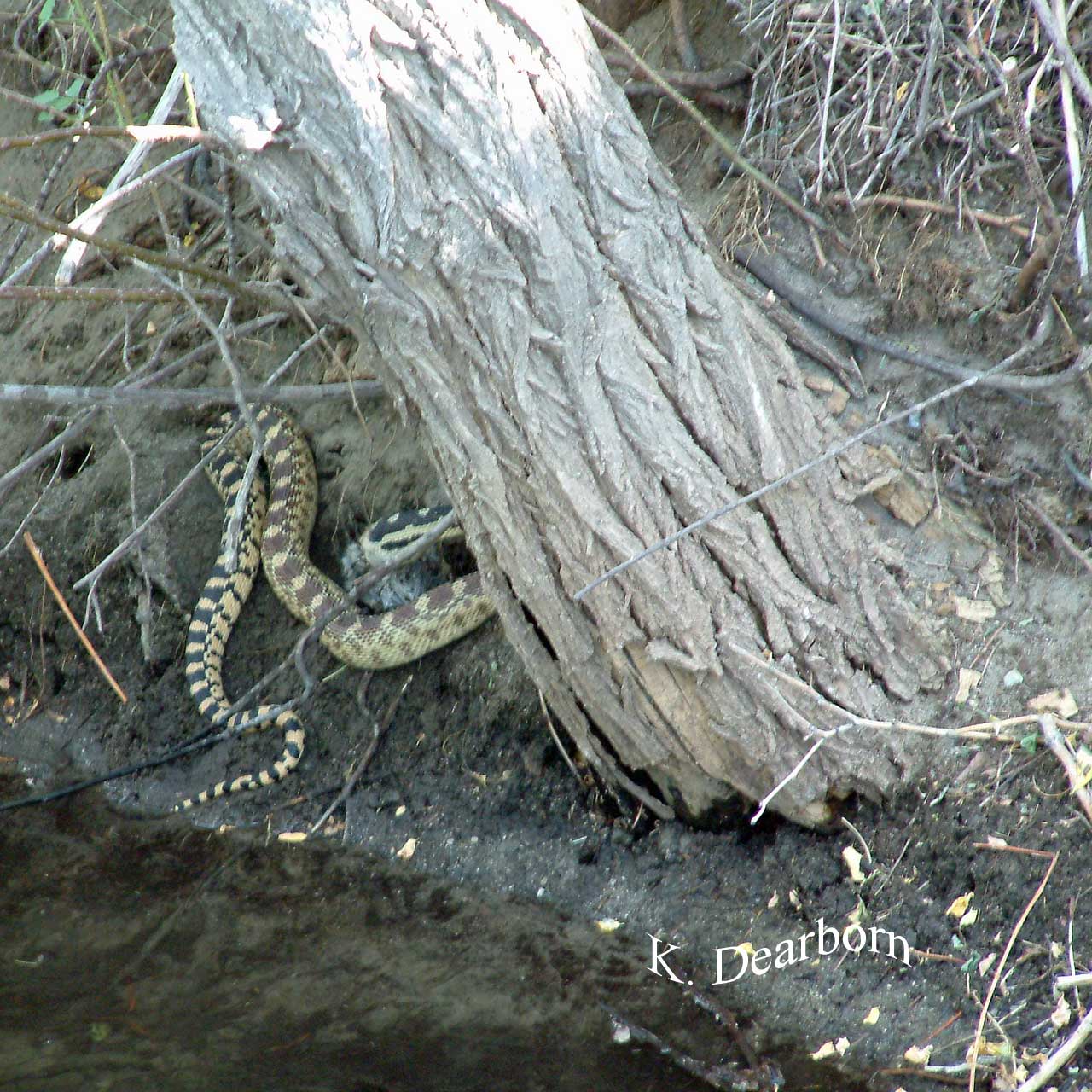
Wild Gopher Snake Feeding

Seeing a snake in the wild is unusual, spotting a wild snake that has just caught its prey and is in the process of feeding is rare.


While fishing on a stream in the Eastern Sierra mountains, we happened on a gopher snake that had just constricted a pack rat and was starting to swallow it. You can see the bottom edge of the pack rat's stick nest in the top right of the photo.


When a snake is swallowing its food, it is vulnerable to predators. It was evening and this gopher snake was not happy when it initially realized it was being observed. But we kept our distance and just watched and the large gopher snake settled into consuming its catch.


The snake was approximately 1.75 inches in diameter, while the rodent was about the size of my fist. It took 5-10 minutes for the six-foot snake to swallow it's large meal. 

Once the large rodent was swallowed, several of the observers were surprised that there wasn't an equally large lump in the snake's body. But a snake body is very muscular and unless a meal is supersized, the food is compressed down and sent on its way to the very efficient digestive system. Most likely, this snake will not need to feed again for at least 3-4 weeks.

Amazingly, within 20 feet of this sizable adult gopher snake, we also saw a new hatchling (about the width of cotton yarn) swimming up the stream and a yearling (about the width of a pen and 2 ft long). Obviously this stream-side ecosystem was providing enough varied-size prey for multiple generations of gopher snake.


Note the pattern on the gopher snake, kind of checker-board black with yellowish. Frequently, gopher snakes are mistaken for rattlesnakes and killed without hesitation. These snakes are important rodent predators and not dangerous to humans.


I am hoping that one day a gopher snake will one day take up residence in my yard. However, we do have a ring-necked snake that has moved in. But we have what gopher snakes are named after, more on that soon.

Thursday, April 19, 2012

Snake in the Yard

Some people might run screaming if they looked down to see a snake in their backyard, but for me it was a moment of soaring gratification.

Our yard is in the suburbs of Los Angeles. Most wild creatures have to be pushy to find a piece of real estate not overwhelmed by people. Gradually over the 19 years we have lived here we have restored native plants and tried to recreate habitat for California wildlife. Our goal was to create a wildlife refuge in our small yard.


CA slender salamanders, food for ring-necked snake
First the California slender salamanders made their presence known. Allen’s hummingbirds and Bewick’s wrens came to nest. Band-tailed pigeons and California towhees started making daily stops, while white-crowned sparrows, dark-eyed juncos and ruby-crowned kinglets began coming to spend the winter.

The birds brought native plant seeds, black nightshade, and attracted predatory birds like the Cooper’s hawk and red-shouldered hawk. The red-shouldered hawk dropped a western fence lizard into the yard. It took up residence. The western fence lizards have thrived.

And now a ring-necked snake, just a bit bigger around than a pencil and about 18” long, has arrived to hunt the young lizards and the salamanders. There is a natural balance settling over the yard. It  just proves that if you create habitat, wildlife will come.

Sorry there’s no photo. When I saw the snake moving gracefully through the grass, I thought about getting the camera. But I decided to just watch it gradually disappear into a bush and relished a moment of wildness in my “city” backyard.  Next time I'll take a picture, until then, check one of my favorite herp websites for photos CaliforniaHerps.com