Showing posts with label lizards in CA backyard. Show all posts

Sunday, August 04, 2013

Social Life Among Fence Lizards

We think of lizards as individual creatures, loners. For some lizards that lifestyle is true, like the lace monitor that we saw in Australia. Yet the social life of most lizards is unknown.

Western fence lizards are thought to be territorial, keeping other individuals out of their area unless there is reproduction in the air. But I am starting to wonder about the notion of lone individuals.


These two lizards not only have been sitting on the wall together, when they dashed off the wall they went in the same direction. Baby fence lizards hatched out of their eggs over a week ago after weeks of incubation. Are the adults still in the mating mood? I'm not sure.

More investigation is needed here.

Saturday, August 03, 2013

A Lizard in the House!

Today, a lizard found me again - this time in the house!

hatchling western fence lizard
This hatchling western fence lizard was in the doorway to my office. Though he is only about two inches long, he looks pretty plump. I'm not sure if he has been eating spiders in the corner of my office or if he just wandered in this morning.

We carefully scooped him up and relocated him to the back yard. In Southern California we don't have any lizards that are dangerous. In fact, this little guy is highly beneficial as an insect predator. We want him around, though not in the house.

What's really amazing is how clearly you can see this little guy's "third eye" or parietal eye. It is the small yellowish dot in the center of the back of its head. This slight depression has light sensitive cells that help lizards protect themselves (it alerts them to shadows passing overhead), its provides seasonal information with the amount of daily sunlight and it is important for stimulating hormones and timing reproduction.

A lizard in the house can be surprising, but it is great to have them as part of our healthy ecosystem. 

Thursday, August 01, 2013

When a Fence Lizard and an Alligator Lizard Meet

When you're traveling, discovery comes easily. But wilderness in our own backyards and neighborhoods can offer discovery as well.

I went out this morning looking for something unexpected and two lizards found me. 

Lizards in my yard are not unexpected. Western fence lizards (Sceloporus occidentalis) have become abundant over the last 10 years. This year we have already seen at least three new babies. The more native California vegetation we have, the more we attract native insects and the greater the resources for the lizards.


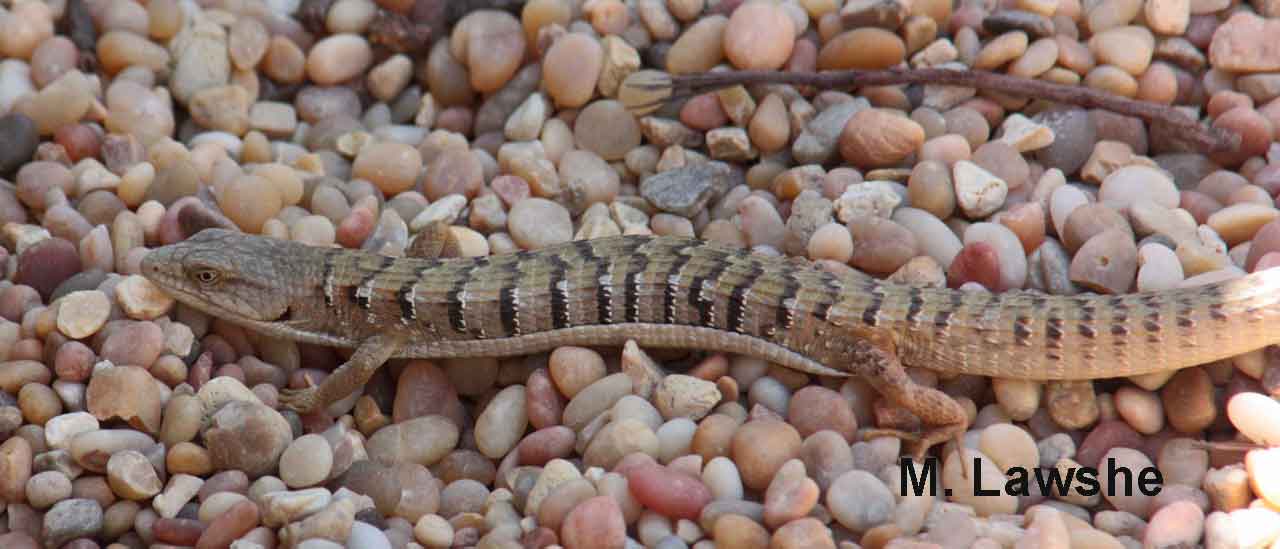
Alligator lizards (Elgaria multicarinata) like the one pictured above, have been resident in our yard since we moved in 19 years ago. But I have never seen these two lizard species interact. 

Fence lizards are sun lovers, frequently basking out in the open. They communicate with each other visually with displays of head bobbing and revealing their blue chests. The alligator lizards, on the other hand, are shy creatures slipping through the shadows and feeding into the night on warm summer evenings.

This morning I happened upon an adult western fence lizard and a sub-adult alligator lizard. The fence lizard was trying to chase the alligator lizard out of its territory. The alligator lizard (about the girth of a pencil and 7"-8" long) took refuge on a branch in a bush about a foot off the ground. It turned, like its namesake, with an open mouth and hissing. It tried to scare off the fence lizard.

It was a miniature primeval world moment - wild lizards unencumbered by the actions of people. I ran to get the camera, but only got a picture of the fence lizard. While the fence lizard is primarily an insect eater, a larger alligator lizard could prey on the two-inch-long western fence lizard hatchlings. 

If you just take a moment to observe, you'll be surprised what you can discover close to home. This August Discover yourself.

(Australian wild lizards, Turkish wild lizards)