Showing posts with label backyard as wildlife sanctuary. Show all posts

Monday, April 12, 2021

The Joys of Providing Wildlife Habitat


This morning some traveling friends stopped in for breakfast. Three migrating black-headed grosbeak (Pheucticus melanocephalus) were at the bird feeder. (A female is sitting on the right side of the tube feeder above.) They have spent the winter in Mexico or Central America and now they are headed north. They may nest somewhere near-by or they may migrate all the way up to British Columbia, Canada.

It's rewarding to know that they can find our oasis of habitat in the sprawling suburbs of Los Angeles. For more than ten years, black-headed grosbeaks have been stopping here for food and water as they pass through in April and then again in late July or August as they head south. I know this because I keep track in a bird journal.


Especially when the California hillsides are dryer than they should be, our yard provides food, water, and shelter for these migrants to stop and rest for a few days. 

The birds who live here year round are nesting. The native plants are providing nectar for at least four nesting Allen's hummingbirds. 


These Allen's hummingbird chicks hatched on April 10th. (The nest wasn't finished when the first egg was laid.) If you look closely you can see the bits of eggshell inside the nest cup just to the left and above the naked chick.


Two full days old and the chicks still have closed eyes, but they raise their little beaks to be fed whenever a shadow falls across the nest. (See the tiny beak raised for food.) This nest is on our patio. 


Another female nesting in a native hollyleaf cherry shrub in the front yard urged her fully feather chicks to fly on April 10th. (She has been successfully nesting in our yard for several years.)

So far in 2021 we've had four Allen's hummingbird nesting attempts. Two were successful - one with one chick and the other with two chicks.

Creating wildlife habitat is vital for migrating and nesting birds. Too much of their native habitat has been developed and changed. We have watched our yard transform from a sterile suburban yard to a small wildlife reserve. Birds in California face a huge loss of habitat due to development and climate change. You can make a difference with native plants and water.

Monday, April 29, 2019

Peace Rose in the Garden

There is peace in the garden. 


The 'Peace' rose is associated with World War 2 and has a very dramatic and interesting story. Ludwing Taschner tells it well on Gerbera.org

Its beautiful bloom is a spring and late summer highlight. I love how the glowing yellow is fringed with delicate pink. Peace is one of the most planted roses across the US because its large blooms are hardy in most regions.

With all of the angst in the world, from politics to civil unrest, the garden offers a place to escape and to see hope. We should all spend more time there than at our computers.

Other Backyard roses
Lady Banks rose
Hidden Gardens of LA


Monday, March 20, 2017

Celebrating The First Day of Spring 2017


This year the Vernal Equinox finds Southern California lush from winter rains. The garden is flush with flowers. The Lady Banks rose has more blooms than leaves. While she isn't a native, the birds love this thatch of thorn-less climbing rose. The house finches and white-crowned sparrows actually nibble on the rose buds. It is a great place for small birds to hide when the Cooper's hawk is on the prowl.


Several natives are in bloom already. It has taken this ceanothus (snow flurry) years to establish itself, but this year the white blooms are stark against the deep green foliage. Typically our blue-colored ceanothus (concha) is more visible.

The native verbena have been strong bloomers throughout the years of drought. Several of the sparrow and finch species explore beneath them. They may be eating tiny seeds produced by the plants or be thinning out the native insects that are attracted to this flowering species.

Rising summer temperatures in our area have pushed us to incorporate more natives from Baja Mexico into our backyard habitat. This Euphorbia xanti, or Baja spurge, flowers in spring and has tiny green leaves year round. It can be invasive, but up on our hillside it helps with erosion, is drought tolerant, and provides another thatch for avian parents to leave their youngsters. It has served as a play pen for our California towhees and Bewick's wrens. The maze of tiny branches provides roosting and protection for young birds left on their own during parts of the day.

While native plants are a priority for me, I have to admit that two of my favorite flowers in the yard right now are decorative non-natives: the wisteria and the clivia.

Named in honor of Lady Clive, Charlotte Percy the Duchess of Northumberland, in the early 1800s, Clivia miniata, or Kaffir lily, are beautifully flowering plants from shadowy forests of Africa. They are incredibly sturdy. The hybrid individuals in our yard came with us to this house over 20 years ago. They were separated from ancestors in Pasadena about 30 years ago. Clivia are somewhat drought tolerant if planted in shady protected locations. And if they don't seem to be thriving, you can dig them up and move them. Some of my plants have been moved three or four times before finding a location with protection, but enough morning sun to inspire blooming. One huge plus: the gopher won't eat them.

The Wisteria sinensis is a Chinese import, but known for adapting to Southern California weather. My wisteria is doing fine in a pot on the patio. It is also drought tolerant, but in a pot requires closer water attention. Not only are the blooms natural art, the valley carpenter bees love to visit them. This surprises me, but I am thankful that such a beautiful flower plays an important role in my backyard habitat. The hummingbirds also like to sit on its thin vine stems.

On this first day of spring. Take a moment to refresh your mind and spirit with the new life around you. Our first hummingbird chicks of the year fledged on Friday and the Bewick wrens have seven eggs in their nest. Soon the yard will be filled with baby birds.

Monday, March 30, 2015

The Benefits of Creating Wildlife Habitat


A walk in a natural place clears the mind and invigorates the senses. When you create wildlife habitat in your yard, you not only provide homes and dining areas for creatures, you build a natural oasis for yourself.


Take a minute and experience a morning in my California habitat. The plants attract insects, birds, reptiles and the occasional mammal. They also provide a healthy home for the California desert tortoises in my care.

Creating habitat means adding native plants, some for food and some for shelter. Planting natives isn't always successful in the way you envision. 

The lupine I started from seed was growing quite well until the tortoises roused from their winter slumber. I guess a lupine snack was a spring tonic. In moments, my months of nursing the seed to a vigorous plant was chomped away. However, native plants help to keep the tortoises healthier. 

Wildlife habitat also means staying away from insecticides and herbicides, and managing dead wood so that animals have places to nest or hide, while still eliminating fire threat. A small water source is also very important.

To see more creatures living in our wildlife habitat check out the lizards, Valley carpenter bees, gray bird grasshopper, Bewick's wrens and more on The Earth Minute - wildlife.

This week marks a year of one-minute videos sharing biodiversity and wild places from around the world on TheEarthMinute.com

To inspire your own gardening choices check out one-minute visits to L.A.'s Hidden Gardens like the Pierce College Botanical Garden pictured below.


Friday, January 09, 2015

Encountering a Bull Elk

Why create habitat in your yard? Because when you interact with other living things you have a better understanding of yourself. Sounds a bit heavy-handed, but I believe it. 

A backyard with habitat attracts native species. Today a red-tailed hawk watched me trying to apprehend a pocket gopher. Check out video of our resident Bewick's wrens, valley carpenter bees, lizards, grasshoppers and red jumping spider.

this younger male is small by comparison and still in velvet
Living in a metropolitan area, my interactions with large animals come when I'm off hiking or traveling. This summer I had an amazing encounter with a bull Roosevelt elk (Cervus elaphus roosevelti). He was right off a heavily trafficked trail in Redwoods National Park, but few people noticed him. The Roosevelt elk is the largest subspecies of elk surviving in North America and this male was huge, the size of a large horse. He stood 5 foot to the shoulder, with a long neck, and antlers that reached 3-4 feet up from his head.

Bull Roosevelt elk average a 16-year life span in the wild. The older the male the larger and more branched his antlers. Elk antlers are a renewable resource; they drop off after the breeding season and are grown anew the following year.


The older male shown here is just entering the rut, or breeding season. While the antlers are growing they are covered with a thin layer of tissue and are vascular, blood flows through the bony growth. As the breeding season approaches in the fall, antlers stop growing. Blood stops flowing through the antler and thin skin layer. The tissue covering dries up and the bull rubs his antlers against bushes and other vegetation to remove the velvety covering. Here you can see that this male has been removing velvet that still had some vascular circulation; his antlers appear bloody. 

With the beginning of the rut, male elk are filled with testosterone. Breeding and competing for females take priority over any other activity, even eating. Few males remain the dominant or top breeding male for more than a season. A top male will frequently be so worn out by the end of the rut that he does not have the energy reserves to survive the winter.


two female elk with their calves at twilight
The Roosevelt elk is found only along the northwest coast from northern California, to Oregon and Washington, and on two Alaskan islands where they were introduced. The subspecies was named for President Theodore Roosevelt who created Olympic National Park in Washington state as a preserve for the 20 remaining members of this elk subspecies in the early 1900s. Today over 7,000 individual Roosevelt elk can be found across their range. They are another example of successful conservation, including well-managed hunting. Channel Island Fox.

This large member of the deer family plays an important role in clearing the forest understory. They help keep forests healthy by creating open space for other animals and encouraging the growth of young plants. Healthy elk populations, however, need predators. Let's keep our fingers crossed for the gray wolves making their way back into California and the mountain lions trying to maintain healthy numbers. 


In the mean time, make 2015 the year you make your backyard a habitat for native plants and wildlife.

Wednesday, April 09, 2014

Mourning Cloak Caterpillars

I first noticed them as a small mass of black threads high in the ornamental plum tree–black caterpillars about the thickness of a pen.

They were clumped together munching on the purple leaves. It has been a while since we have had mourning cloak caterpillars, but I recognized them immediately–bristly black caterpillars with spots of deep red. With all of the nesting birds gathering food for chicks, the caterpillars were fortunate not to be spotted in the top of the tree.

Mourning cloak butterflies are one of the few species, like monarchs that overwinter as adults. A tattered adult frequented the yard a few weeks ago. It must have been a female that laid eggs on the newly emerged plum leaves.

A few days later I saw them again, but the clump had become more dispersed and they seemed plumper. 

On Sunday, I just happened to see one "wandering" up the front of the house. It had trekked down the tree, across the ground, across the walkway and started up the wall. Wandering is the phase of a caterpillar's life when it leaves the food resource it has matured on and goes in search of a quiet place to start its metamorphosis into a butterfly. The caterpillar didn't know how lucky it was, I also spotted an alligator lizard waiting at the trunk of the tree and feasting upon some of the caterpillar's less lucky siblings.

Monday, I watched a second caterpillar troop up the wall of the house.

This individual attached itself to the bottom center of our "Welcome" sign. For about 24 hours it hung there, upside-down, in a "J" position.

But yesterday afternoon I was lucky enough to catch the moment when it dropped its spiky black outer skin and became a chrysalis. For a few moments it twitched and shuddered, hanging from the tiny base of silk that attached it to the ceramic sign. Then it became very still.

In the next 10-14 days it should emerge as a butterfly. How exciting! 

We planted nectar plants to attract butterflies and it seems to have worked. Hopefully, this is just the first of several butterflies species we will have this year.

Thursday, April 03, 2014

Bewick's Wrens Build a Nest

The Bewick’s wrens committed to building a nest in the cow skull on the back patio this spring. Both the male and female are in on this venture, but I can’t tell them apart. Listen for their communications as one works and the other makes suggestions or comments.

Once you watch this, you will never question that birds communicate specific things to each other.


The Bewick’s wren (Thryomanes bewickii) is a medium-sized wren found across the southwestern United States. They are believed to be monogamous. Typically their nest is built in a cavity, like a tree hollow, but they will use a nest house or even a ceramic pot


The male is the primary nest builder with the female adding the finishing touches after she has approved the venture. She incubates the eggs, but he helps feed the offspring. Typically, it’s just a 14 day incubation and then just 14 days before the chicks leave the nest. The little ones are moderately feathered when their parents urge them out into the world. The little family tends to stay together for several weeks. The parents move the youngsters to various hollows and hidden areas and gradually teach them to hunt for insects.

For more 1 minute nature videos see TheEarthMinute.com

Each week take a minute to find inspiration in the natural world. Take a one minute hike, a one minute adventure, escape for a minute of exploration. TheEarthMinute.com

Monday, February 10, 2014

Footprint in the Garden

Sometimes the visitors to your backyard habitat, come and go under the cover of night. We don't know they've dropped in unless they leave a calling card. 


This morning, we found this print in some damp soil. At first glance it looks like the handprint of a tiny person. But I don't think we currently have any trolls or gnomes. 

Typically, a "tiny handprint" appearance is the sign of a North American raccoon. We questioned that at first because the raccoon usually has plumper ends to the digits and visible claw marks. However, it must have been how the animal was walking and the dampness of the soil. 

We have been seeing raccoons off and on since last summer. At about two inches across, this is probably an adult raccoon.

Monday, September 23, 2013

"The California Wildlife Habitat Garden"

Book Review of

The California Wildlife Habitat Garden; How to attract bees, butterflies, birds and other animals by Nancy Bauer 

2012. University of California Press: Berkeley, CA.

CA native plants in our front garden
We all know it: habitat loss is a major cause of plant and animal diversity decline. Typically, the first examples that come to mind are exotic animals like Asian elephants pushed into diminishing forests by growing human populations in India or China. Some people might think of charismatic golden-lion tamarins, small primates, struggling to share coastal forests with the sprawl of Rio de Janeiro in Brazil. But few people, especially those living in California, realize our urban growth is creating similar habitat destruction and decline in our unique California biodiversity.

Nancy Bauer’s book places a well-needed spotlight on creating wildlife habitat specifically in California yards. In five chapters highlighting specific kinds of habitat, she lays out easy to emulate ideas. Each habitat type, whether bird habitat or wildlife pond, includes beautiful photos and a “Garden Profile” of a real garden transformed into a living landscape.
 

Western swallowtail butterfly on native hollyleaf cherry
If a pollinator garden peaks your interest, succinct appendices provide focused information like “Common California Butterflies and Host Plants” or “Top Nectar and Pollen Plant Families.” The watering and mulching information for “Oaks in the Landscape” provided tips that I hope will help our young oak trees be more healthy in the future.

Whether you are up for a dramatic change or willing to gradually create more natural plantings, Bauer’s book is a well-written and valuable resource. For ten years we’ve been gradually replacing exotic ornamental plants in our garden with California natives. Our water use has dropped and the biodiversity in our yard has tripled. With the native plants have come native insects, followed by the birds and reptiles that prey on those insects. If you create an island of habitat, wild creatures will find your oasis. You’ll not only have the pleasure of experiencing the butterflies and birds, but you will know you are providing them food and shelter vital for their survival.  


Habitat comes in all sizes; Even a few will-chosen host plants on a terrace can create habitat. A couple of “Seasonal Plants for Hummingbirds” will transform a sterile patio. Creating habitat is like drops of water collecting to become a stream. Your small habitat connects with a neighbor’s and gradually we create corridors for wildlife. Be inspired by Bauer’s book to make a positive difference. What species will you help save with your wildlife habitat garden?

Other Book Reviews:
"Life in a Shell"
"Feathers; The Evolution of a Natural Miracle"
"Alex and Me"
"The Geese of Beaver Bog"
"Survival of the Sickest"


Tuesday, August 06, 2013

Thursday, August 01, 2013

When a Fence Lizard and an Alligator Lizard Meet

When you're traveling, discovery comes easily. But wilderness in our own backyards and neighborhoods can offer discovery as well.

I went out this morning looking for something unexpected and two lizards found me. 

Lizards in my yard are not unexpected. Western fence lizards (Sceloporus occidentalis) have become abundant over the last 10 years. This year we have already seen at least three new babies. The more native California vegetation we have, the more we attract native insects and the greater the resources for the lizards.


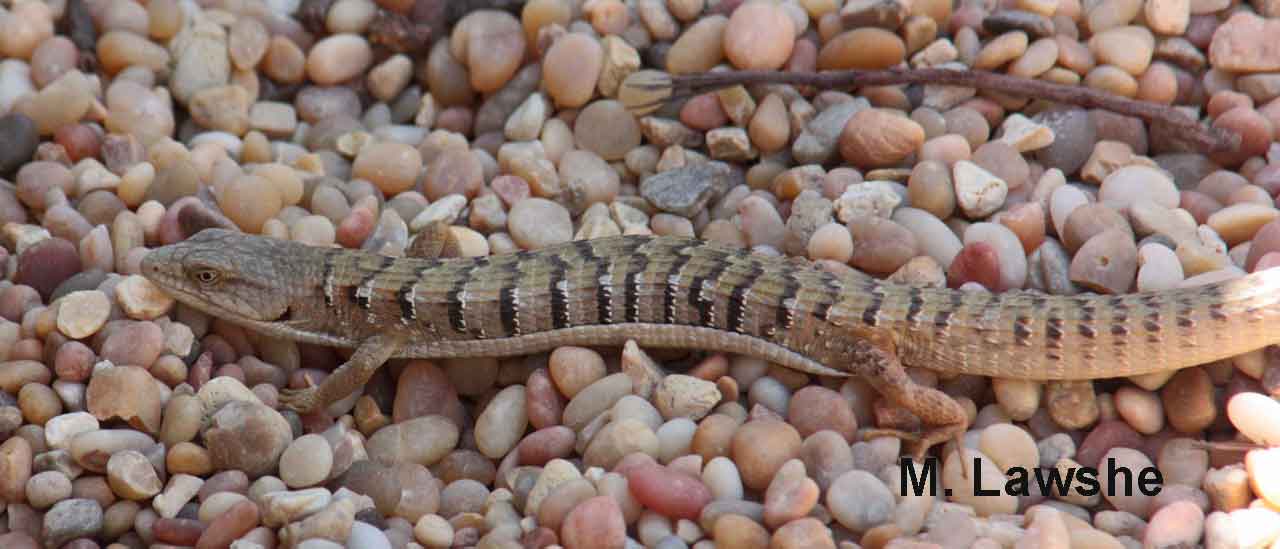
Alligator lizards (Elgaria multicarinata) like the one pictured above, have been resident in our yard since we moved in 19 years ago. But I have never seen these two lizard species interact. 

Fence lizards are sun lovers, frequently basking out in the open. They communicate with each other visually with displays of head bobbing and revealing their blue chests. The alligator lizards, on the other hand, are shy creatures slipping through the shadows and feeding into the night on warm summer evenings.

This morning I happened upon an adult western fence lizard and a sub-adult alligator lizard. The fence lizard was trying to chase the alligator lizard out of its territory. The alligator lizard (about the girth of a pencil and 7"-8" long) took refuge on a branch in a bush about a foot off the ground. It turned, like its namesake, with an open mouth and hissing. It tried to scare off the fence lizard.

It was a miniature primeval world moment - wild lizards unencumbered by the actions of people. I ran to get the camera, but only got a picture of the fence lizard. While the fence lizard is primarily an insect eater, a larger alligator lizard could prey on the two-inch-long western fence lizard hatchlings. 

If you just take a moment to observe, you'll be surprised what you can discover close to home. This August Discover yourself.

(Australian wild lizards, Turkish wild lizards)


Saturday, May 04, 2013

Mosaic Bird House

Birds live and nest in my yard. Cavity nesting species can have a difficult time finding natural cavities in an increasingly human altered landscape. Dead trees are quickly removed for fire prevention or because people don't like dead plants. Unfortunately most people don't realize the diversity of life that can continue to live in a dead tree.


I've been putting up birdhouses around my yard for several years. The Bewick's wrens have taken advantage of these dwellings on several occasions. The oak titmouse pair inspects the real estate, but have yet to move in. There is the wine cork house, the lariat house, the wooden nestbox and the chicken pot, which wasn't supposed to be a bird house but the wrens thought otherwise.

The inspiration from my recent visit to a local Garden Show, spurred me to finish this mosaic birdhouse. The structure is a wooden birdhouse purchased from a local craft store. I made a point of looking for a shape and entry size that were attractive to my wrens. 

Bits of leftover tile, glass beads and polished stones were glued onto the structure with a tile adhesive. I topped it with a glass bird that had broken off of a swizzle stick provided by my friend Kim. Grout filed the spaces between the tiles and then the whole thing was sprayed with a sealer.

The intent was decoration, but the Bewick's wren pair are inspecting it already. They've just fledged their second clutch of kids this year. Maybe their third will grow-up in the mosaic house.

Wednesday, November 28, 2012

Wild Lizards of Australia

skink in tree at Mossman Gorge, QLD
I've just returned from Australia where we were fortunate not only to see over 185 species of birds, but we also saw at least one new species of lizard every day.

Skinks were everywhere, from the hillsides of Sidney's suburbs to the remote forests of Kakadu National Park in the Northern Territories. Skinks are the most numerous family of lizards in the world.  

We saw copperhead skinks, arboreal skink species, and tiny little species only a few inches long. At the other end of the spectrum we saw a large female lace monitor about 4 foot long.  Lizards were everywhere. Enjoying them as wild creatures was magical.

wild lace monitor
Yet many of these lizards - water dragons, skinks, geckos and monitor lizards - are heavily sought for the pet trade.  People just do not realize the important jobs these animals have to do in their habitats. None of these creatures can complete the role they were meant to fulfill if they are taken from the wild and kept in a cage.

The illegal pet trade is a black market that robs wild places of their residents and destroys ecosystems around the world. Unfortunately, the United States is one of the largest participants in this devastating trade.
gecko catching insects on the wall of our hotel
Enjoy your wild neighbors and don't rob other places in the world of their wild residents - lizards, fish, birds, amphibians or mammals. Become informed about the pet trade and how it impacts wild populations. Check out a post by my friend Sandra Cruze on the black market pet trade.

If you want to experience wild animals, create native habitat where animals live naturally of their own free will. I have a snake, two lizard species, various spiders and over 76 species of birds that visit the natural habitat in my yard. Value your wild neighbors, don't be a wildlife kidnapper and destroyer.

Wednesday, June 20, 2012

Discovery in the Garden

For the past few weeks I’ve been crazy busy with work, tasks generated by the wants of people. It sucks you in until it seems important, urgent, even vital. But in reality the pushing of paper from one pile to another, the sprinkling of well-placed words and the measuring of spaces between lines of text is a never-ending job without surprise or discovery. In other words, most of us humans are engaged in lifeless pursuits.

This morning, I went out into the yard for just a few minutes and watched two different species, a valley carpenter bee and an Allen’s hummingbird drinking nectar from the same “lipstick sage.” The amazing thing was they each approached the plant in a different way. The hummingbird drank directly from the red trumpet flower. The bee grabbed onto mature flowers that had turned white and licked at the outside base of the bloom. When it did this, the flower trumpet dropped under its body and the bee was put in a position where its legs went into the flower thereby delivering pollen.

The variety of species that are living in this small suburban plot of land has increased dramatically since I first started documenting and replacing “traditional” landscaping with plants and features that would create habitat. (hummingbird territories)

Discovery is a daily occurrence in a natural habitat; and that natural habitat doesn’t have to be a distant rainforest. Everyday the habitat that surrounds my home offers me real moments of life–survival, birth, death, discovery and change.

Thursday, April 19, 2012

Snake in the Yard

Some people might run screaming if they looked down to see a snake in their backyard, but for me it was a moment of soaring gratification.

Our yard is in the suburbs of Los Angeles. Most wild creatures have to be pushy to find a piece of real estate not overwhelmed by people. Gradually over the 19 years we have lived here we have restored native plants and tried to recreate habitat for California wildlife. Our goal was to create a wildlife refuge in our small yard.


CA slender salamanders, food for ring-necked snake
First the California slender salamanders made their presence known. Allen’s hummingbirds and Bewick’s wrens came to nest. Band-tailed pigeons and California towhees started making daily stops, while white-crowned sparrows, dark-eyed juncos and ruby-crowned kinglets began coming to spend the winter.

The birds brought native plant seeds, black nightshade, and attracted predatory birds like the Cooper’s hawk and red-shouldered hawk. The red-shouldered hawk dropped a western fence lizard into the yard. It took up residence. The western fence lizards have thrived.

And now a ring-necked snake, just a bit bigger around than a pencil and about 18” long, has arrived to hunt the young lizards and the salamanders. There is a natural balance settling over the yard. It  just proves that if you create habitat, wildlife will come.

Sorry there’s no photo. When I saw the snake moving gracefully through the grass, I thought about getting the camera. But I decided to just watch it gradually disappear into a bush and relished a moment of wildness in my “city” backyard.  Next time I'll take a picture, until then, check one of my favorite herp websites for photos CaliforniaHerps.com

Tuesday, May 10, 2011

House Finches

Have you seen a bird slightly larger than a house sparrow fluttering under your eaves? Or maybe they are investigating under your patio roof. The male has purplish-red breeding coloration splashed brightly on his head and chest in the spring. The dowdy female is more mottled brown with white streaks on her chest.

I recently received a question about these delightful little birds and it was a good reminder that just because a species is common, it doesn’t mean that everyone knows about them. House finches (Carpodacus mexicanus) are frequent visitors and residents in Southern California backyards. 


Their nests are half-grapefruit-sized works of art woven of dried grasses and plant fiber. Protected locations under house eaves and on patios are a strong attraction for these builders of delicate nests. As seed-eating song birds, house finches have flourished in suburban landscapes and their numbers have increased as more and more of the American Southwest has been developed.
Today, house finches are found across the United States, but it wasn’t always that way. House finches are originally residents of the Southwest. The male’s coloration is striking and his song is beautiful. People arriving in the Los Angeles area in the 1920’s took to capturing these charismatic finches and sending them east to sell as “Hollywood finches.” Captive birds escaped and founded east coast populations. Today house finches are one of the most observed species at backyard feeders in 48 states. (See the trends for house finch populations for your area at Project Feederwatch)

House finches are not picky feeders. They will eat black sunflower, millet and especially the nyjer seed that also attracts goldfinches. They are also attracted to native plants that produce fruit, like hollyleaf cherry and Catalina cherry. (Creating a yard for wildlife)

Every birder starts with a species that catches their eye and makes them look at birds in a different way. For many people a singing male house finch may be that first bird. While they may be common, house finches are an important species in our local biodiversity.

Friday, April 22, 2011

Earth Day Gift

Happy Earth Day!


I've been too busy lately; busy at the computer, busy with projects. I haven't taken my own advice. I haven't been out in the yard. 

This morning the dog was barking at something and I went up the hill to see what had attracted her attention. It could have been a rabbit, a coyote, a raven. I didn't see anything but then, there on the ground was a butterfly clinging to the dirt. The mourning cloak butterfly, with its wings closed, looked like a dead leaf.

Was it dead or alive? I picked it up. It was motionless, but gripped my finger with surprising strength. I headed toward the house to take a picture. As I held the butterfly on my finger it started to vibrate, just slightly. It was like a shiver. It only lasted a moment, but before I reached the house the tiny creature shivered two more times. Each time the strength and length of the shivering increased. It was waking up.


Of course the batteries in the camera were dead and I couldn't find the extra set.


With a final quivering the mourning cloak awakened from its nighttime torpor, a mini hibernation. In the 50 degree evening temperature, the butterfly had gone into resource conservation mode. It's resting place, on an eastern-facing slope, had it positioned to warm up with the morning sun. But I had come along and disturbed it. 


Before I could get new batteries in the camera, the mourning cloak began to flutter its wings. I quickly scooped it up and released it outside. It flew up into the Chinese elm tree. Mourning cloak caterpillars.


The Bewick's wren chicks are begging for food from their haggard parents. The first lesser goldfinch chick of the season is learning to fly. And I held a wild butterfly on my finger and watched it wake up. Go outside and the wild creatures will show you what life is really about. Happy Earth Day!

Friday, March 18, 2011

Low Level Radiation Reaches California

Radiation from Japan has reached California in low levels. Can there be a more important time to watch the natural world around us and observe changes to our "canaries in the coalmine" – wild birds and amphibians?

Get to know you wild neighbors and they will help us all to really understand the environmental ramifications for ourselves.

This morning the Allen's hummingbirds are tending to spring. A Spot took a quick bath in the fountain. BIF is drinking at his feeder while his father FIK is moving in on his son's territory and dominating the courtship field with the females. (Hummingbird Territories and hummingbirds and climate change)

The Bewick's wrens are building a new nest in the lariat house. The House and Last Year's Nest.


The rain that has been forecast has yet to arrive. Will it be the life-giving resource that the blooming plants are hungry for or will it bring an unseen radiation taint?

Two weeks from now will the hummingbirds be nesting or will life be greatly altered?

Saturday, February 26, 2011

Arrow-Headed Flatworm in Zone 1

I’m still entering all of the data for species in Zone 1 for my Backyard Biodiversity Project. But there is an unexpected resident in this small Zone of stairs, cement and a narrow planter. Zone Map


This is an arrow-headed flatworm (Bipalium kewensis) a species of planarian. These are the kind of creatures that you may have experimented with in biology class dividing their bodies in a variety of ways to see that they can regenerate themselves if they have some part of a head.

The arrow-headed flatworm is an exotic species thought to be an Indo-Malayan import that came to the U.S. via Europe.

How did this creature come to be in my planter? How long have its ancestors frequented my neighborhood?

I found it under a brick in the planter. Interestingly, when I looked at the photos I realized that it appears to have some nasty gashes along its sides. And actually it seemed to be regenerating most of its head. How did it come to have these injuries? Did it encounter some kind of a predator? And what was that predator? Was it the resident of the cave?

It amazes me the stories you can discover when you look under a rock.

Friday, January 14, 2011

Mapping the Backyard Biodiversity Project

The first step in documenting the biodiversity in our backyard ecosystem is dividing the landscape into Zones.

I have mapped the yards (front and back) into 18 Zones with an additional Garage Zone and House Zone.

These Zones are determined using physical separations (walls, fences, concrete walkways, gravel paths) and by clumping the natural microhabitats. For example, Zone 1 includes a planter against the house and a concrete walkway with stairs. This area is heavily used by people going in and out of the house. This activity has an effect on the plants and animals willing to live there. I have examined Zone 1 in detail before. Zone 1, 2007

Zone 2 has changed dramatically since I first documented the species living there in 2001, 2004 and 2007. This Zone is a raised planter in front of the house stretching from the sidewalk to the walkway and extending to the western corner of the house. It is landscaped and receives moderate sun in the summer. It was my observation of alien plants attracting alien pest species and creating a dead zone for native animal species that first inspired me to remove the African daisies in this planter and replace them with native plants. It will be interesting to see how the biodiversity in this area compares with ten years ago. Zone 2, 2007

Zone 17 is the lower end of the driveway at the side of the house and a small planter that typically only receives rain water. But this area has offered surprises in the past. Zone 17, 2007


Creating Zones provides manageable areas of observation and also allows comparison between areas that are similar or dissimilar in terrain, physical attributes and water availability. Off to a good start.