Showing posts with label attracting wildlife. Show all posts

Monday, April 12, 2021

The Joys of Providing Wildlife Habitat


This morning some traveling friends stopped in for breakfast. Three migrating black-headed grosbeak (Pheucticus melanocephalus) were at the bird feeder. (A female is sitting on the right side of the tube feeder above.) They have spent the winter in Mexico or Central America and now they are headed north. They may nest somewhere near-by or they may migrate all the way up to British Columbia, Canada.

It's rewarding to know that they can find our oasis of habitat in the sprawling suburbs of Los Angeles. For more than ten years, black-headed grosbeaks have been stopping here for food and water as they pass through in April and then again in late July or August as they head south. I know this because I keep track in a bird journal.


Especially when the California hillsides are dryer than they should be, our yard provides food, water, and shelter for these migrants to stop and rest for a few days. 

The birds who live here year round are nesting. The native plants are providing nectar for at least four nesting Allen's hummingbirds. 


These Allen's hummingbird chicks hatched on April 10th. (The nest wasn't finished when the first egg was laid.) If you look closely you can see the bits of eggshell inside the nest cup just to the left and above the naked chick.


Two full days old and the chicks still have closed eyes, but they raise their little beaks to be fed whenever a shadow falls across the nest. (See the tiny beak raised for food.) This nest is on our patio. 


Another female nesting in a native hollyleaf cherry shrub in the front yard urged her fully feather chicks to fly on April 10th. (She has been successfully nesting in our yard for several years.)

So far in 2021 we've had four Allen's hummingbird nesting attempts. Two were successful - one with one chick and the other with two chicks.

Creating wildlife habitat is vital for migrating and nesting birds. Too much of their native habitat has been developed and changed. We have watched our yard transform from a sterile suburban yard to a small wildlife reserve. Birds in California face a huge loss of habitat due to development and climate change. You can make a difference with native plants and water.

Monday, March 20, 2017

Celebrating The First Day of Spring 2017


This year the Vernal Equinox finds Southern California lush from winter rains. The garden is flush with flowers. The Lady Banks rose has more blooms than leaves. While she isn't a native, the birds love this thatch of thorn-less climbing rose. The house finches and white-crowned sparrows actually nibble on the rose buds. It is a great place for small birds to hide when the Cooper's hawk is on the prowl.


Several natives are in bloom already. It has taken this ceanothus (snow flurry) years to establish itself, but this year the white blooms are stark against the deep green foliage. Typically our blue-colored ceanothus (concha) is more visible.

The native verbena have been strong bloomers throughout the years of drought. Several of the sparrow and finch species explore beneath them. They may be eating tiny seeds produced by the plants or be thinning out the native insects that are attracted to this flowering species.

Rising summer temperatures in our area have pushed us to incorporate more natives from Baja Mexico into our backyard habitat. This Euphorbia xanti, or Baja spurge, flowers in spring and has tiny green leaves year round. It can be invasive, but up on our hillside it helps with erosion, is drought tolerant, and provides another thatch for avian parents to leave their youngsters. It has served as a play pen for our California towhees and Bewick's wrens. The maze of tiny branches provides roosting and protection for young birds left on their own during parts of the day.

While native plants are a priority for me, I have to admit that two of my favorite flowers in the yard right now are decorative non-natives: the wisteria and the clivia.

Named in honor of Lady Clive, Charlotte Percy the Duchess of Northumberland, in the early 1800s, Clivia miniata, or Kaffir lily, are beautifully flowering plants from shadowy forests of Africa. They are incredibly sturdy. The hybrid individuals in our yard came with us to this house over 20 years ago. They were separated from ancestors in Pasadena about 30 years ago. Clivia are somewhat drought tolerant if planted in shady protected locations. And if they don't seem to be thriving, you can dig them up and move them. Some of my plants have been moved three or four times before finding a location with protection, but enough morning sun to inspire blooming. One huge plus: the gopher won't eat them.

The Wisteria sinensis is a Chinese import, but known for adapting to Southern California weather. My wisteria is doing fine in a pot on the patio. It is also drought tolerant, but in a pot requires closer water attention. Not only are the blooms natural art, the valley carpenter bees love to visit them. This surprises me, but I am thankful that such a beautiful flower plays an important role in my backyard habitat. The hummingbirds also like to sit on its thin vine stems.

On this first day of spring. Take a moment to refresh your mind and spirit with the new life around you. Our first hummingbird chicks of the year fledged on Friday and the Bewick wrens have seven eggs in their nest. Soon the yard will be filled with baby birds.

Monday, March 30, 2015

The Benefits of Creating Wildlife Habitat


A walk in a natural place clears the mind and invigorates the senses. When you create wildlife habitat in your yard, you not only provide homes and dining areas for creatures, you build a natural oasis for yourself.


Take a minute and experience a morning in my California habitat. The plants attract insects, birds, reptiles and the occasional mammal. They also provide a healthy home for the California desert tortoises in my care.

Creating habitat means adding native plants, some for food and some for shelter. Planting natives isn't always successful in the way you envision. 

The lupine I started from seed was growing quite well until the tortoises roused from their winter slumber. I guess a lupine snack was a spring tonic. In moments, my months of nursing the seed to a vigorous plant was chomped away. However, native plants help to keep the tortoises healthier. 

Wildlife habitat also means staying away from insecticides and herbicides, and managing dead wood so that animals have places to nest or hide, while still eliminating fire threat. A small water source is also very important.

To see more creatures living in our wildlife habitat check out the lizards, Valley carpenter bees, gray bird grasshopper, Bewick's wrens and more on The Earth Minute - wildlife.

This week marks a year of one-minute videos sharing biodiversity and wild places from around the world on TheEarthMinute.com

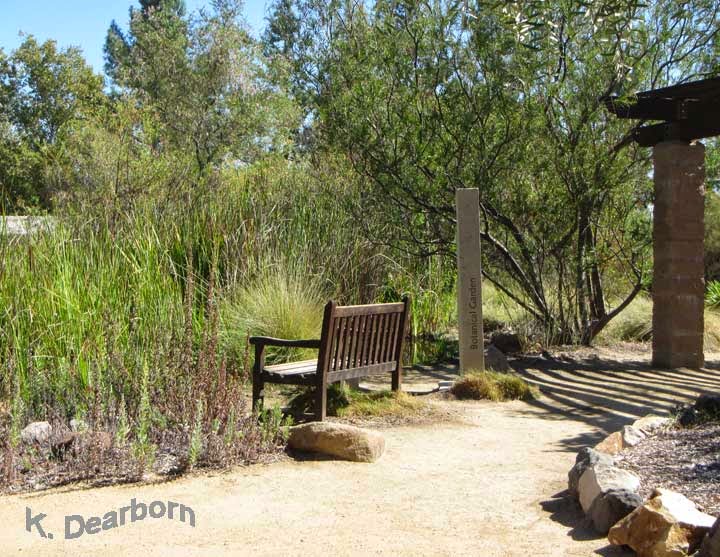
To inspire your own gardening choices check out one-minute visits to L.A.'s Hidden Gardens like the Pierce College Botanical Garden pictured below.


Monday, August 05, 2013

California's Native Cherry

Native plants are the basis for creating wildlife habitat. The scarlet blush spreading across the Catalina cherry fruit alerts birds, insects and even mammals that this important native chaparral fruit is ripening.

Frequently introduced fox squirrels will ravage the fruit before it can ripen, but as more of our native plants mature there is more fruit for all of our wild visitors to discover. Today the house finches, hooded orioles and mockingbirds are beginning to enjoy these plump cherries. And of course the plants themselves provide nesting locations for birds (Allen's hummingbird).

The native cherries of California’s chaparral are related to the bing cherries and other varieties that humans cultivate, but these are wild growing plants. The Catalina cherry (Prunis ilicifolia lyonii) is found across the southern California Channel Islands (Santa Cruz Island). It is closely related to the holly-leaved cherry (Prunis ilicifolia ilicifolia) found along coastal hillsides on the mainland. But as the name implies, holly-leaved cherry has a leaf with holly-shaped prickles. The chaparral plant evolved this protection to reduce browsing by deer and other large herbivorous animals.

We have both holly-leaved cherry and Catalina cherry growing in our yard. Their close ancestry means we also have hybrids of the two. The Catalina cherry has evolved over the last 10,000 years without a large herbivore. In the Channel Island ecosystem there was no need to protect its leaves from large browsing animals, so the plant stopped expending energy on prickly leaves. The edges of the leaves are smooth.

Instead the Catalina cherry put more resources into larger fruit to attract the Channel Island fox (Urocyon littoralis). The small omnivorous fox relies on fruit for much of its late-summer-to-autumn diet. It can swallow the large pit of the cherry and transport the seed to areas distant from the parent plant in its scat.


While the fruit of the Catalina cherry looks similar to a cherry you might eat, I had my own moment of discovery when I tasted one. This cherry has not been cultivated to western human tastes. It is edible. The skin is somewhat sweet, but the pale flesh is astringent. Only when it is almost over ripe does it lose its bitterness and become palatable. According to Jan Timbrook in her book, Chumash Ethnobotany, the fruit of the cherry or “islay” was more valuable to the native peoples than acorns.

The fruit was used two ways. On occasion the thin layer of very ripe flesh was eaten directly or was mashed and dried to create a kind of fruit leather. However the most valuable part of the fruit was the seed or pit. Typically the fruit was collected in large quantities and allowed to rot. The flesh was then removed and the pit was cracked open to reveal the seed kernel inside. Like acorns, these kernels were poisonous if eaten directly and they had to be specially treated. The kernels were washed a number of times, either in hot or cold water, to leach away a form of cyanide. Once the bitter-tasting poison was gone the kernels were boiled, made into a mash and formed into balls or cakes. According to Timbrook’s sources the cakes are bean-like in texture and taste. 

So valued were islay cakes that they were frequently placed as offerings at sacred locations.

I wonder how the Chumash discovered the process to take advantage of this resource? Why did they even think the seed was valuable? Did they observe bear, deer, rodents, birds or other animals that made use of this plant?

I have often seen the pits opened and the kernels eaten out by some animal, but I’m not sure who. Still more to be discovered in my own yard.  

Saturday, May 04, 2013

Mosaic Bird House

Birds live and nest in my yard. Cavity nesting species can have a difficult time finding natural cavities in an increasingly human altered landscape. Dead trees are quickly removed for fire prevention or because people don't like dead plants. Unfortunately most people don't realize the diversity of life that can continue to live in a dead tree.


I've been putting up birdhouses around my yard for several years. The Bewick's wrens have taken advantage of these dwellings on several occasions. The oak titmouse pair inspects the real estate, but have yet to move in. There is the wine cork house, the lariat house, the wooden nestbox and the chicken pot, which wasn't supposed to be a bird house but the wrens thought otherwise.

The inspiration from my recent visit to a local Garden Show, spurred me to finish this mosaic birdhouse. The structure is a wooden birdhouse purchased from a local craft store. I made a point of looking for a shape and entry size that were attractive to my wrens. 

Bits of leftover tile, glass beads and polished stones were glued onto the structure with a tile adhesive. I topped it with a glass bird that had broken off of a swizzle stick provided by my friend Kim. Grout filed the spaces between the tiles and then the whole thing was sprayed with a sealer.

The intent was decoration, but the Bewick's wren pair are inspecting it already. They've just fledged their second clutch of kids this year. Maybe their third will grow-up in the mosaic house.

Sunday, March 07, 2010

California Natives in Spring

The ceanothus is blooming in bursts of blue-purple flower sprays. This lovely California native is green year round but is shows off in the early spring. Throughout the Santa Monica Mountains large specimens are edged in purple to white blooms, giving them the common name California lilac.

There are a variety of cultivars and this Yankee Point ceanothus hugs the ground, making it perfect along the walkway up to the house.

Meanwhile, the spring rains and the increasing sunlight have awoken the slumbering redbud. While I love our flowering ornamental plum, the tree is older and suffers from termite damage. It is at the later part of its life. Beneath it we have planted a young redbud, a native species that will one day replace the plum. The redbud also blooms and the seedpods it produces are a food source for a variety of birds. Succession is a normal cycle in a habitat and we have chosen to let the plum nurture a native tree to eventually replace it in our wildlife habitat.

Planting native plants doesn't have to be an all or nothing proposition. Gradually adding natives allows you to learn where different species will be successful.

Thursday, February 18, 2010

Habitat for Wildlife in the City

A desert cottontail dashed frantically across the street. Where ever she stopped she seemed exposed and threatened. She seemed the perfect analogy for all of the native residents of our neighborhood this morning.

The warm days have brought an unseasonal beginning of spring. The cottontails are breeding. The reptiles and butterflies are emerging from their cool weather slumber. And the birds are heavily invested in nesting. This male Bewick’s wren is busily collecting food for a family of chicks.

But it is February. This morning city workers are drastically pruning streetside trees as another storm is headed our way. The sound of chain saws cuts through the afternoon air. It brings a feeling of angst and worry. Add in the gardeners with their blowers and electric pruners chewing through what was this morning’s safe habitat and you have wildlife scattering like frantic rabbits.

How many early nests in those trees are already occupied with youngsters?

How many overgrown shrubs are harboring hummingbird chicks just about to leave the nest?

A dead liquid amber tree on the corner died over the summer. It is slated for removal. As I walked by I noticed a woodpecker hole high on a main branch. A timid head peered out. Parent or chick? For cavity nesters, finding an appropriate tree can be nearly impossible.

For once the city is trimming trees in winter. But this year, the plants and animals have a different calendar.

The trees need to be trimmed and a dead tree at a major intersection is a danger. But we seem to have forgotten that plants have other reasons for existing rather than pleasing our eye. Plants provide food and shelter. Trees are bedrooms and nurseries. They are restaurants and hotels.

Take a look at your yard–your trees and shrubs, flowers and grass. If you aren’t providing habitat, you aren’t part of the real neighborhood.

Monday, September 15, 2008

Feeding Hummingbirds


When I first looked around to see which birds were naturally spending time in our yard, I was dazzled by hummingbirds.

Tiny, but tenacious, hummingbirds were the first avian neighbors with which I
established a relationship. I’ve used all kinds of hummingbird feeders.

  • glass bottles with plastic bases
  • decorative glass with a rubber stopper
  • flat saucer type
  • decorative glass bottles
  • glass mini vials

Which works the best?

The flat saucer-type feeders are best for meeting the SES –Simple, Easy, Sturdy – requirements. They are Simple – there are few parts. They are Easy – cleaning doesn’t require bottle brushes and many can go into the dishwasher. They are Sturdy – quality models are made of durable plastic that stands up to UV and heavy use. This one has been outside everyday for three years.

The model I like has a perch all the way around and a water well at the center that deters ants. Because the nectar is in the bottom of the saucer, these feeders seldom drip, even in a strong wind.


The simplest versions are red in color so they attract hummingbird attention. You DO NOT need to put red coloring into hummingbird nectar. The birds are attracted to the feeder, not the liquid inside. Red coloring can be unhealthy for hummingbirds.

Hummingbirds are smart. Their brains have evolved to store information regarding hundreds of food locations. They know which flowers are open at which times of the day. They know when they last visited a flower and how long it will take that flower to regenerate more nectar. If you have reliable, fresh food to offer, migrating hummers will remember your location from year to year.


One of the primary issues with hummingbird nectar is keeping feeders clean and nectar fresh. Even if the feeder is not empty, it should be cleaned and refilled with new nectar every five days. Especially in warm climates, sugary nectar can ferment and mold in a few days. You wouldn’t want to pick up a can of soda that had been sitting open for a week and take a drink, neither does that beautiful hummingbird.

Some locations are fortunate to have so many hummingbirds that a large feeder can be drained of food in a day, but that isn’t the case for most of us. Smaller feeders allow you to keep your nectar fresh without feeling like you are wasting a lot.

Glass bottles with plastic bases
Some people swear by the classic glass bottle feeder with a red, plastic flower base. I had one for years. While they are great for attracting hummingbirds, they have lots of parts which can fail. They are difficult to keep clean. In a wind, they often drip attracting ants and, despite the “bee guards,” it is hard to keep bees from being attracted.

Decorative glass with a rubber stopper
Those pretty glass bottles with rubber stoppers can be difficult to clean and are hard to maintain a good seal. If nectar drips, it will attract insects.


Glass mini vials
I have used these single vial feeders successfully with reluctant juvenile hummers that needed to learn to use a feeder for food. The small quantity of food in the vial however allows it to heat up faster and therefore to go bad faster. Glass vials can also be too long for hummingbirds to reach the food, once it is half way gone. They are time consuming to clean and need to be refilled frequently.


Decorative glass feeders

Some hummingbird feeders are stunning works of art. I’m not saying you shouldn’t indulge yourself in one of these beauties, but I would discourage it until you have established your yard as a hummingbird site. Do I have one? Yes.


Do the hummingbirds come to it? Yes, but not as ma
ny as come to the SES feeder.

Is it harder to clean? Yes, and even though I am very careful I have broken parts of it and had to replace them. I readily admit that I bought this feeder for me. It is beautiful in the yard.

To be successful feeding hummers:

  • Make your first feeder: Simple - Easy - Sturdy
  • Start with a feeder that has color red on, at least, the area where the hummingbird is supposed to drink the nectar.
  • Position the feeder in an open, visable area
  • Keep nectar fresh - Change food every 5 days or less
  • Keep the feeder clean

Nectar Recipe:
(1 part sugar to 4 parts water)

1/4 cup white cane sugar
1 cup

NO coloring, keep it clear and pure. NO sugar substitutes.

YES, you can make a larger batch and keep it in the refrigerator. Store in glass containers, not plastic.

Now is the time to attract hummingbirds migrating south. Put out that Feeder.

Monday, September 08, 2008

Shopping for Bird Feeders

I've worked in a wildlife habitat store and offered food to backyard birds for over 10 years. How do I pick a bird feeder? I follow one simple rule - SES.

Simple - Easy - Sturdy

Once you start to look for a bird feeder keep this rule in mind. No matter what kind of food you are using or bird you are trying to attract, you will be more successful if you follow SES.

SIMPLE - The birds do not care how much you spend on a feeder. They do not care if the feeder is handmade and decorated with copper filigree. They do not care if the glass was hand blown in Spain. Remember what the birds are interested in, eating. Anti-squirrel action may entertain you, but if it makes it harder for the birds to eat, it isn’t a plus. Birds want simple access to food. Some decorative bird feeders are works of art, but save the art for after you are established and know your clientele. SIMPLE feeders have fewer moving parts and less to break.


EASY - Refilling the feeder with food and cleaning the feeder should be EASY. Everyone’s definition of easy is different, but be honest with yourself about what you are willing to do. If it is difficult or time consuming, you won’t do it. Like any food supplier, you must be consistent. If there is no food or the food is spoiled, you will be out of business. Look for a bird feeder that is easy to open, easy to fill and easy to take apart and clean.

One thing I like about quality tube feeders is they are easy to take apart and scrub. “Do I have to clean my bird feeder?” Afraid so. Just like any restaurant table, the more patrons, the more you will have to clean it. Soap and water is the easiest way to clean. If your feeder won’t stand up to soap and water, reconsider.

STURDY - A bird feeder should be sturdy. If parts are breaking off, you will avoid filling it. Sharp edges or broken bits may endanger feeding birds. Determine which materials are most STURDY for your location. Wood may last forever in a dry mild climate or waste away to a soggy mess in a rainy area. In the Southwest, ultraviolet rays can degrade plastic in a single summer. More expense feeders tend to use UV resistant plastics. Cheap metal can fall ill to rust, but steel bibs on plastic openings can provide protection and durability.

As you weigh one bird feeder against another, remember SES - Simple, Easy, Sturdy. If the blown glass feeder is calling you but doesn’t pass the SES test, think again.


Thursday, August 14, 2008

A Bird Feeder in Every Yard

A red-shouldered hawk rises from the ground with a large fence lizard clutched in its talons. This isn’t a scene from a nature documentary, this is the view from my kitchen. I don’t live in rural Montana, but rather in the suburbs of Los Angeles, two blocks from one of the busiest freeways in North America, if not the world. How am I so lucky to see wildlife dramas on a daily basis? One main reason – ten years ago, I put out a bird feeder.

I know what you're thinking. “Wait a minute, hawks don’t come to bird feeders and neither do western fence lizards.” And you would be absolutely right, but putting out a bird feeder influenced our entire outdoor living space.

  1. It attracted birds to the yard in a visible way so that I could begin to learn the local bird species.
  2. New knowledge about what different birds were eating encouraged me to reconsider the plants I planted in the yard. I began to relandscape with native plant species to attract birds and butterflies.
  3. We stopped using all forms of toxic pesticides and herbicides in and around our house. Native insects reduced pest insects, lizards and bats moved in to eat the insects.
  4. We added a water feature to provide dependable water to wildlife during drought seasons, a greater variety of birds, including hawks, and rabbits arrived.

Putting out a bird feeder was the beginning of creating a habitat in my yard that supports a wide range of biodiversity. Seven species of birds now nest here - see our hummingbird babies. Two species of lizards reproduce in our garden; western fence lizard. Check out some of the creatures that share our suburban space - Backyard Biodiversity Project.

As I look out my window over the rooftops of track homes, past the Ventura Freeway and the growing amount of pavement and concrete, I take heart in knowing that my yard is an oasis for wild creatures. As cities expand, wild habitat is lost. Birds and animals lose important living, hunting and breeding territory. But it doesn’t have to be that way. You can make a difference. Put out a bird feeder. Begin offering a safe place for wild birds to find dependable food.

  • How do you decide on a bird feeder?
  • What food should you use?
  • What about water?

Each week AnimalBytes will take on an elemental question of how to start and be successful in creating habitat. We’ll start with bird-feeder basics.

Around the globe, wild animals are facing survival challenges as human populations expand and climate change alters weather patterns. If you make your yard, patio or even balcony a safe habitat, together we can change the world for the better.

Wednesday, May 02, 2007

Beneficial Wild Creatures In Your Garden


When my friend Douglas Welch of A Gardener's Notebook read the post about the benefits of western fence lizards in our garden, he proposed a joint effort on beneficial wild animals you should attract to your garden.

To find out why it’s important to attract this valley carpenter bee to your yard, read my post Beneficial Wild Creatures In Your Garden on A Gardener’s Notebook.