A walk in a natural place clears the mind and invigorates the senses. When you create wildlife habitat in your yard, you not only provide homes and dining areas for creatures, you build a natural oasis for yourself.
Take a minute and experience a morning in my California habitat. The plants attract insects, birds, reptiles and the occasional mammal. They also provide a healthy home for the California desert tortoises in my care.
The lupine I started from seed was growing quite well until the tortoises roused from their winter slumber. I guess a lupine snack was a spring tonic. In moments, my months of nursing the seed to a vigorous plant was chomped away. However, native plants help to keep the tortoises healthier.
Wildlife habitat also means staying away from insecticides and herbicides, and managing dead wood so that animals have places to nest or hide, while still eliminating fire threat. A small water source is also very important.
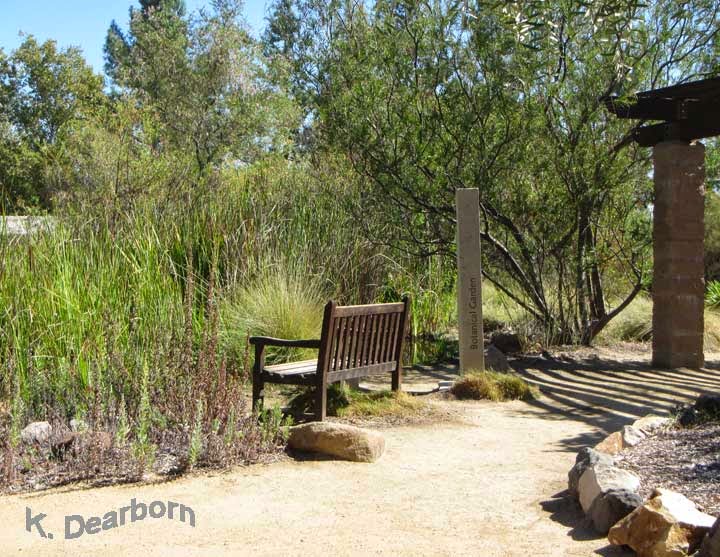
To see more creatures living in our wildlife habitat check out the lizards, Valley carpenter bees, gray bird grasshopper, Bewick's wrens and more on The Earth Minute - wildlife. This week marks a year of one-minute videos sharing biodiversity and wild places from around the world on TheEarthMinute.com To inspire your own gardening choices check out one-minute visits to L.A.'s Hidden Gardens like the Pierce College Botanical Garden pictured below.
The Bewick’s wrens committed to building a nest in the cow skull on the back patio this spring. Both the male and female are in on this venture, but I can’t tell them apart. Listen for their communications as one works and the other makes suggestions or comments.
Once you watch this, you will never question that birds communicate specific things to each other. The Bewick’s wren (Thryomanes bewickii) is a medium-sized wren found across the southwestern United States. They are believed to be monogamous. Typically their nest is built in a cavity, like a tree hollow, but they will use a nest house or even a ceramic pot.
The male is the primary nest builder with the female adding the finishing touches after she has approved the venture. She incubates the eggs, but he helps feed the offspring. Typically, it’s just a 14 day incubation and then just 14 days before the chicks leave the nest. The little ones are moderately feathered when their parents urge them out into the world. The little family tends to stay together for several weeks. The parents move the youngsters to various hollows and hidden areas and gradually teach them to hunt for insects.
Each week take a minute to find inspiration in the natural world. Take a one minute hike, a one minute adventure, escape for a minute of exploration. TheEarthMinute.com